Jun 18 2012
Art Smalley: Standardized Confusion » The Lean Edge
See on Scoop.it – lean manufacturing
Another substantive contribution from Art Smalley, this time about standards.
See on theleanedge.org
Jun 18 2012
See on Scoop.it – lean manufacturing
Another substantive contribution from Art Smalley, this time about standards.
See on theleanedge.org
Jun 1 2012
See on Scoop.it – lean manufacturing
More about TPS in health care in Canada, this time about SMED applied to operating room turnarounds. This is not the first time manufacturing techniques cross over to surgery: 100 years ago, through motion studies in operating rooms, industrial engineers Frank and Lillian Gilbreth developed the method by which nurses make tools immediately available to surgeons.
“Surgeons are using Toyota management techniques to cut time between surgeries and halve overtime hours…”
See on www.thestar.com
Mar 5 2012
Via Scoop.it – lean manufacturing
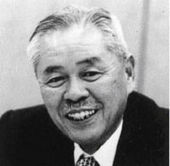
This article includes interesting details about Ohno’s background and early life, from someone who has actually met him.
Via www.gembapantarei.com
Feb 2 2012
Via Scoop.it – lean manufacturing
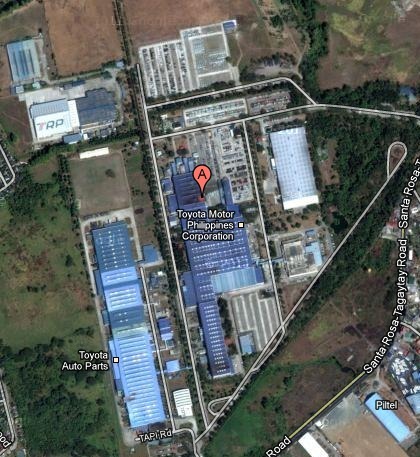
This is news from the Philippines, where the largest car plant is Toyota’s in Santa Rosa, producing only 30,000 units/year. The article’s author sat in a panel of judges that gave Toyota the Employer of the Year award for 2011. This is what he says about the plant: “When we visited their Sta Rosa plant, the Japanese managers were full of praises for the quality of work of their Filipino workers. Our workers have adapted well to their Kaizen work ethic. We were told that the Sta Rosa plant, which assembles the Vios and the Innova, is one of their most productive plants in the Toyota worldwide network.”
Via www.philstar.com

Jan 24 2012
Is there a difference between Lean and the Toyota Production System (TPS)? This is a recurring question. The short answer is yes, but, when you look deeper, it is an issue of packaging as well as of substance.
If you are working in a car company, you cannot openly say that you are using Toyota‘s production system. How could you borrow such things from a competitor, especially if you have been in the business 50 years longer? It is embarrassing to employees, and a weak marketing message. So, regardless of how much you actually use from TPS, you must call it your own “Production Way” or “Operating System,” or…
A generic name like Lean clearly has many practical advantages over TPS. This being said, the minute Lean branched out from Toyota, divergence was to be expected. Major tools of Lean, like Value-Stream Mapping or Kaizen Events are either minor or non-existent in TPS, while the jidoka column of TPS is largely ignored or misunderstood in Lean. See Art Smalley’s presentation at the 2006 Shingo Prize conference, or Working with Machines. The combination of Lean with Six Sigma is also popular in the US, even though Toyota evaluated and passed on Six Sigma.
The umbilical cord, however, was never broken, and the promoters of Lean still use Toyota as a reference. Clearly, nobody would be interested in Lean if it weren’t backed up by the Toyota story, and this raises the question of how far Lean can drift from TPS and still retain this vital link.
The following two comments in the Leadership and Lean The Top 5% discussion group on LinkedIn, highlight the issues. This is what Allison Corabatir has to say, based on her experience at Magna:
There is a lot in a name…. When one says they are implementing TPS, it usually means they are taking a cookie cutter approach and assuming what worked well for Toyota would work well for them too. Obviously, there is no denying that their tools are great and we should learn from Toyota, but in reality, some of the tools need to be tailored to the culture and operation of the company we are working for. […] some tools like VSM does not get enough attention with TPS ( I am a big fan of VSM) and some approaches are totally missing (We put a lot of importance to employee recognisition and rewards). I prefer using the term “lean” and making the system our own.
Who would argue with that? Anna Johnson, on the other hand, describes a very different experience:
My experience with TPS has been that there is a greater emphasis on retention, and lowering of costs through collaboration and teamwork and attrition, whereas while lean equally emphasizes cost cutting, headcount reduction seems more acceptable through RIFs…
When Anna says that Lean “emphasizes cost cutting, headcount reduction,” she describes a 180-degrees turn away from TPS. This version of “Lean” isn’t just a watering down but a betrayal. It is taking the approach with which financial managers have hurt US Manufacturing from the 50s to the 70s, and calling it Lean to mislead audiences into believing that it is Toyota’s approach.
Anybody can slap the Lean label on anything, and it is only a matter of time until this free-for-all makes it worthless. It results in implementations that are best described as L.A.M.E. (Lean As Mistakenly Excecuted) or L.I.N.O (Lean In Name Only). To avoid this, you have to start from the underlying principles of TPS and deploy them in an context-appropriate fashion, but it is easier said than done, because Toyota didn’t do a great job of articulating these principles and we have to reverse-engineer them from TPS.
Lists of principles can be long, abstract, vague and toothless like the UN’s Universal Declaration of Human Rights, or short, specific, and actionable, like the US Bill of Rights. In The Toyota Way, Jeffrey Liker spells out specific and actionable principles, but there are 14 of them, which is too many to remember. The Lean Enterprise Institute has 5 principles, easier to remember but focused exclusively on the flow of materials. They say nothing, for example about human resources. You could claim to follow these principles while practicing yo-yo staffing, hiring massively in boom times and laying off in recessions.
The HBR article on Lean Knowledge Work summarizes Lean principles as follows:
There are good reasons to use the word Lean rather than TPS to designate what we do. Lean evolves in many different directions as it inspires people in different industries to pursue improvement in ways that work in their context, and it is healthy that they should do so. But there will always be bandwagon jumpers just using the label to sell products or services.
Jun 21 2012
Toyota counting on exporting Lean to ride out strong yen, seek global growth
See on Scoop.it – lean manufacturing

See on www.washingtonpost.com
Share this:
Like this:
By Michel Baudin • Press clippings 0 • Tags: Lean, Lean manufacturing, Toyota, Toyota Production System, TPS