Sep 28 2013
Does This Man Look Efficient? | Businessweek
See on Scoop.it – lean manufacturing

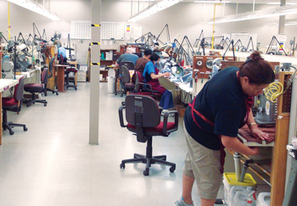
Toyota will scratch at tenths of a second to bring down “takt time,” what it takes to complete a single step in a process…”
The coverage of Lean in the mainstream press often turns into a collection of strange statements of this kind.
What does it mean that only the last quarter turn of the nut adds value? The gas cap on my car is fastened with just a quarter turn, but the nuts that hold the engine together are not. When you tighten a nut, force is applied to the entire length of the thread, which makes running down the nut about as “wasteful” as prepping a surface before painting it.
That Business Week’s editor only pays the author for completed articles does not mean that the work of writing them is waste. Customers, generally, are no authority on the process to make what they buy. If you sell something, it’s your job to figure it out. There is what you need to do, and what you don’t. If you need to do it, it’s not waste; if you don’t, it is.
And Takt time is not what it takes to complete a single step in a process! it is a common misconception but it completely misses the point of producing to takt. For a weekly magazine, the takt time is one week.
See on www.businessweek.com



Oct 2 2013
“The Fragility of Lean is its Strength” | Michael Ballé
See on Scoop.it – lean manufacturing
“Can a pull system with zero stock make the company more fragile? Sure it can, that’s the whole point: fragile, but flexible. The pull system doesn’t make the company fragile: it reveals the weak points. Top performance is about keeping a ball on top of a round hill it needs everybody’s engagement to make sure it stays there.”
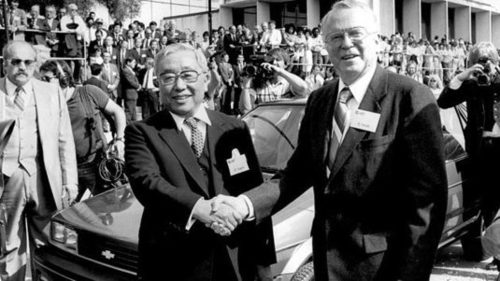
Pull systems don”t have zero stocks, but low stocks, and the experience of disasters — from the Mississippi flood of 1993 in the US, to the Aisin Seiki fire of 1997 and the Fukushima earthquate of 2011 in Japan — has shown Toyota’s pull system to be robust and able to recover much faster than anyone expected, including the Japanese press.
“Fragility is strength” is a cute paradox, but not applicable here. The true paradox is that stocks generally do not protect you against shortages. They do for crude oil and similar commodities, but not for the thousands of different items you need in manufacturing. You end up with full warehouses that are somehow out of the item you need today.
What protects you more effectively is the combination of low stocks with the kind of vigilance that makes you reserve all the available trucking in Chicago a few days before a flood, as Toyota did in 1993. A pull system supports the vigilant monitoring of stocks in two ways:
See on www.scdigest.com
Share this:
Like this:
By Michel Baudin • Press clippings 0 • Tags: Lean, Pull system, Supply Chain Management